NORDWEST presents fourth Future Award for Sustainability to suppliers
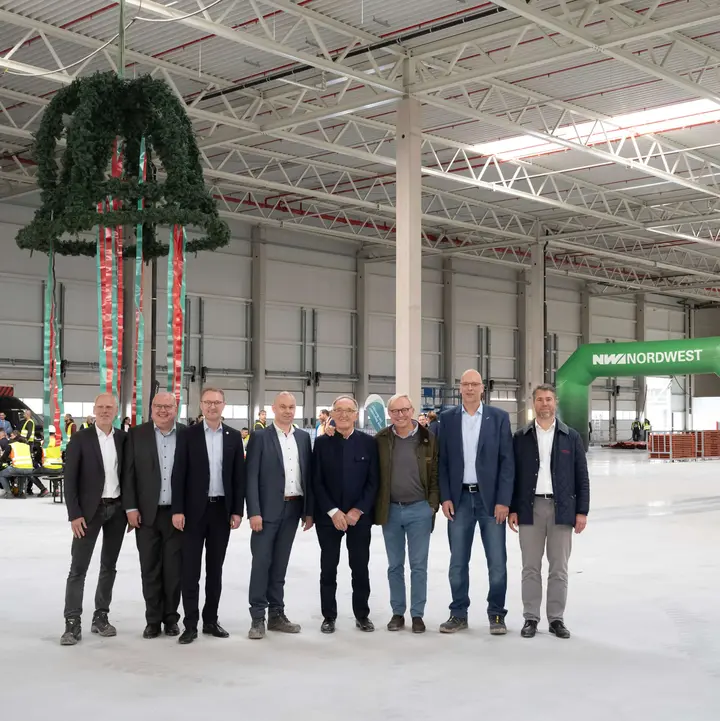
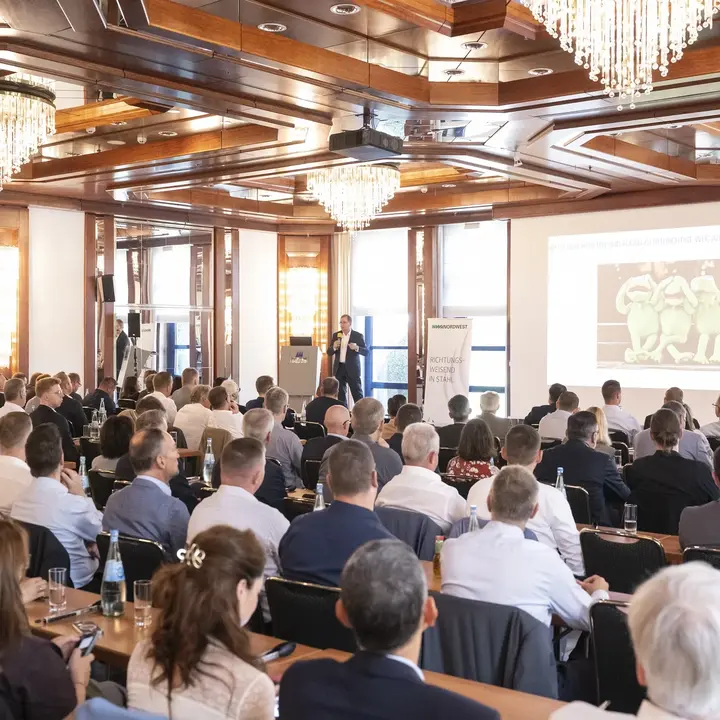
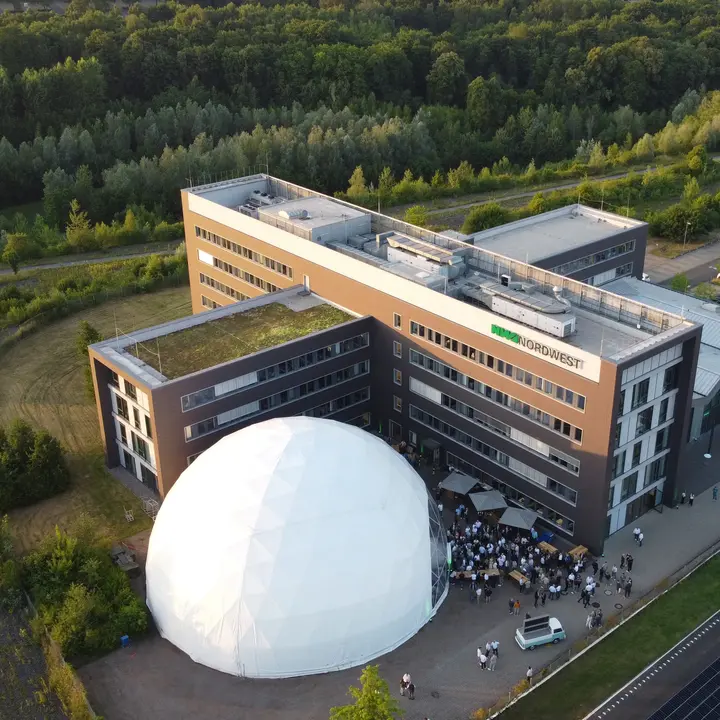
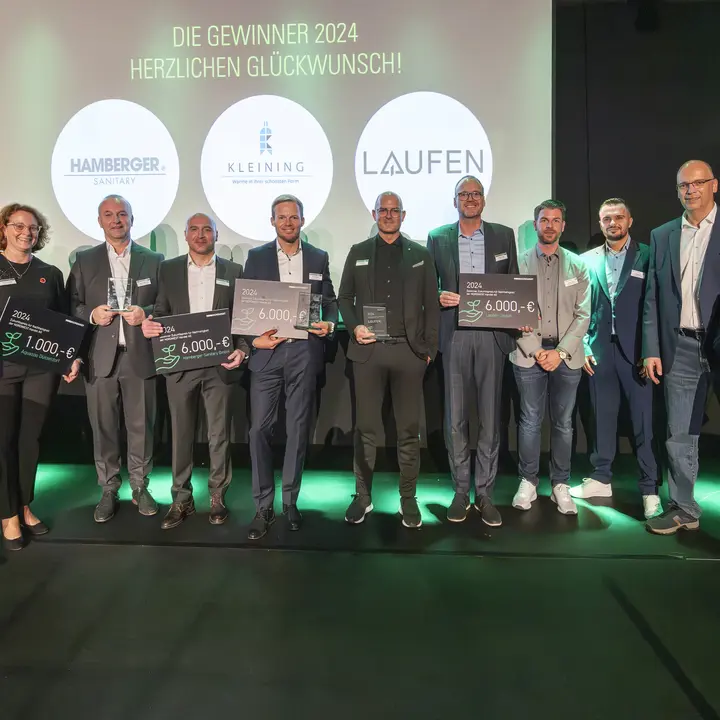
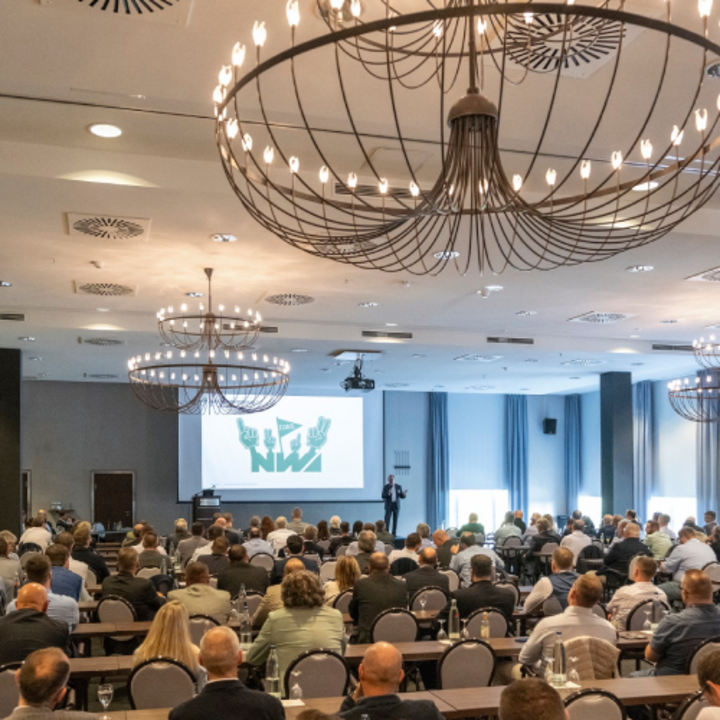
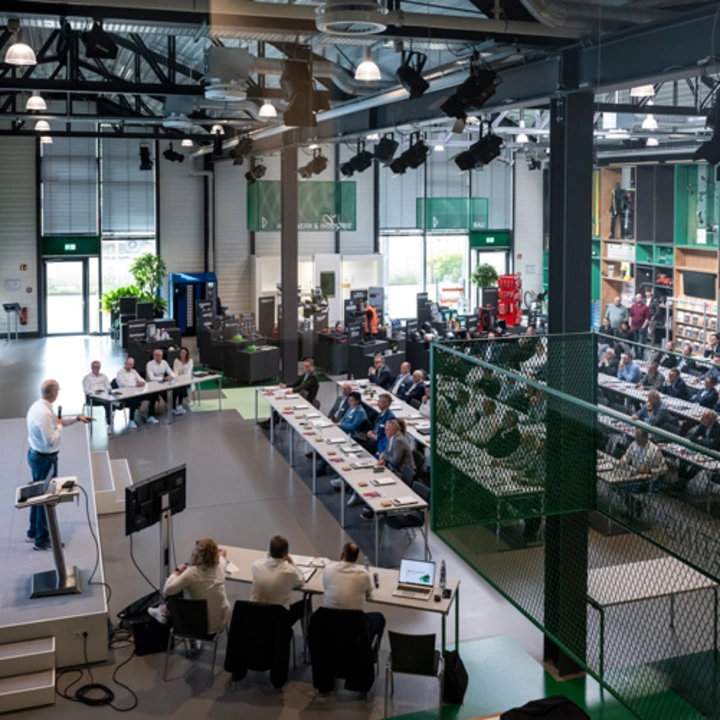
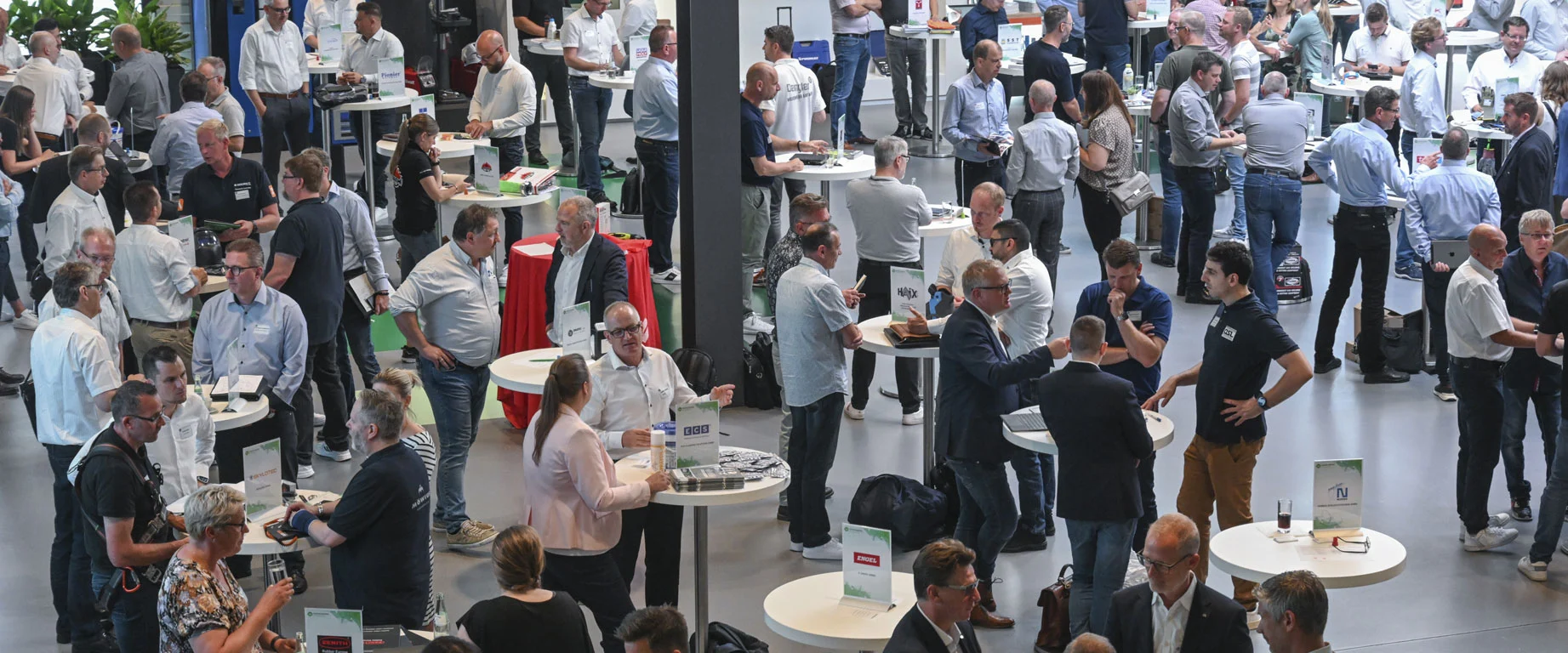
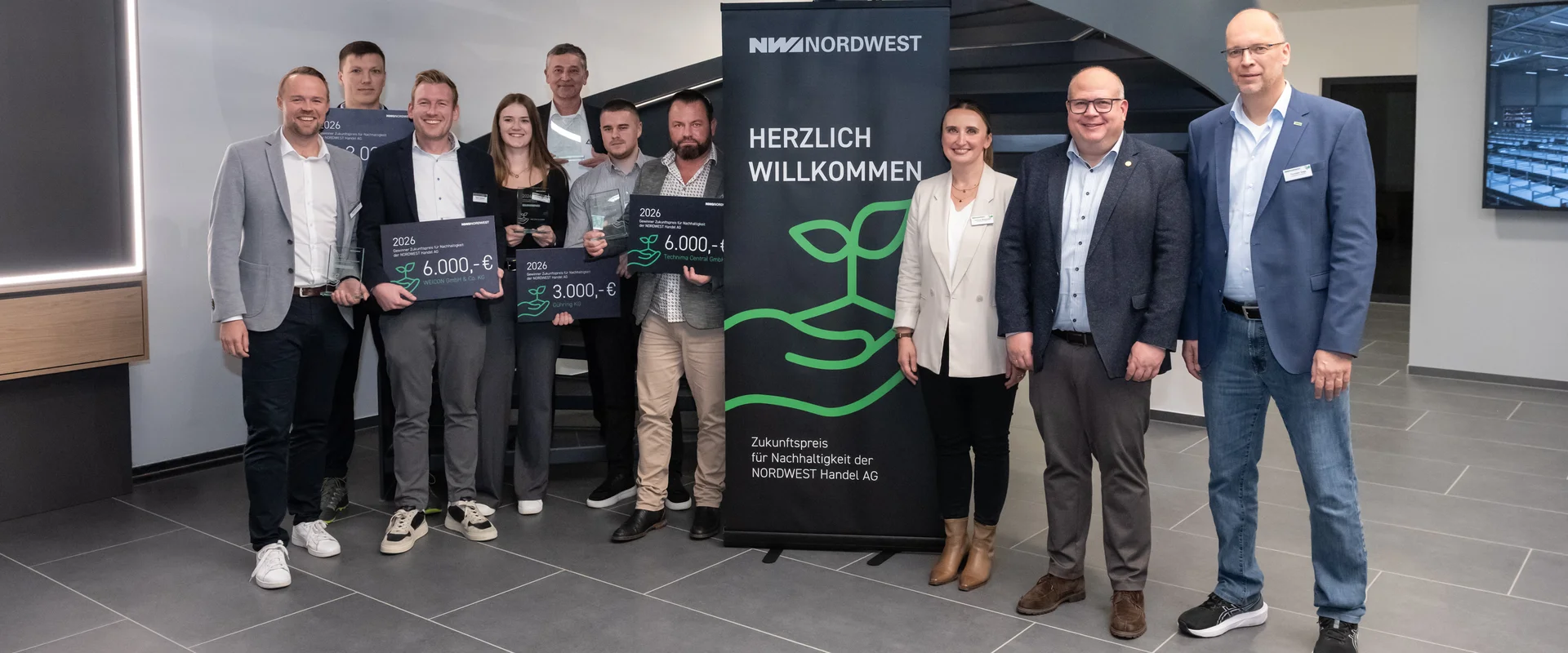
Dortmund/Alsfeld, 9 November 2026 – Four companies, four compelling projects and one shared goal: putting sustainability into practice in business. NORDWEST presented its Future Award for Sustainability to supplier partners for the fourth time on 5 November 2026. Around 100 guests attended the ceremony at the new logistics centre in Alsfeld. A total of 63 projects were submitted for this year’s award. The winners are Gühring KG, CERATIZIT, Technima Central GmbH and WEICON GmbH & Co. KG.
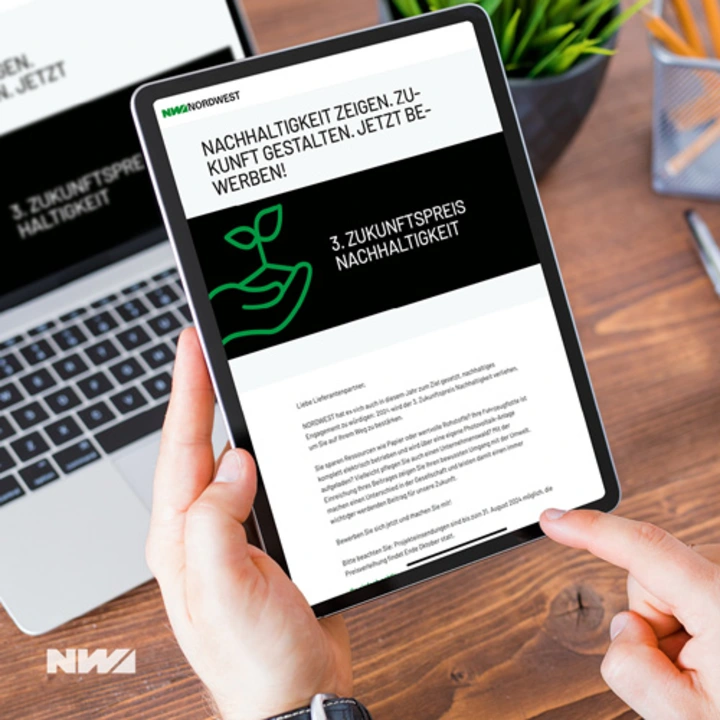
Since 2020, NORDWEST has presented the Future Award for Sustainability every two years to recognise supplier partners that take environmental, economic and social responsibility and put it into practice by implementing concrete projects. The aim of the award goes beyond recognising individual achievements: its broader purpose is to give successful approaches greater visibility within the network and to provide fresh impetus for industry and the specialist trade. “This year’s entries are an impressive demonstration of the many ways in which sustainability is already being put into practice today. What matters to us is that companies go beyond good ideas and take action to implement concrete solutions. With our Future Award, we want to highlight precisely this commitment and encourage others to find their own ways forward,” says Yvonne Weyerstall, Head of Division Trade & Industry at NORDWEST and host of the awards ceremony.
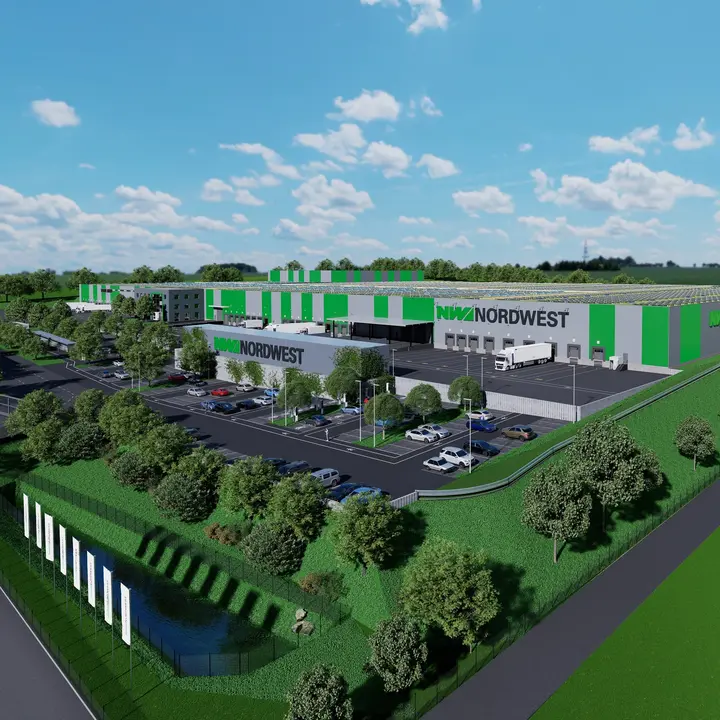
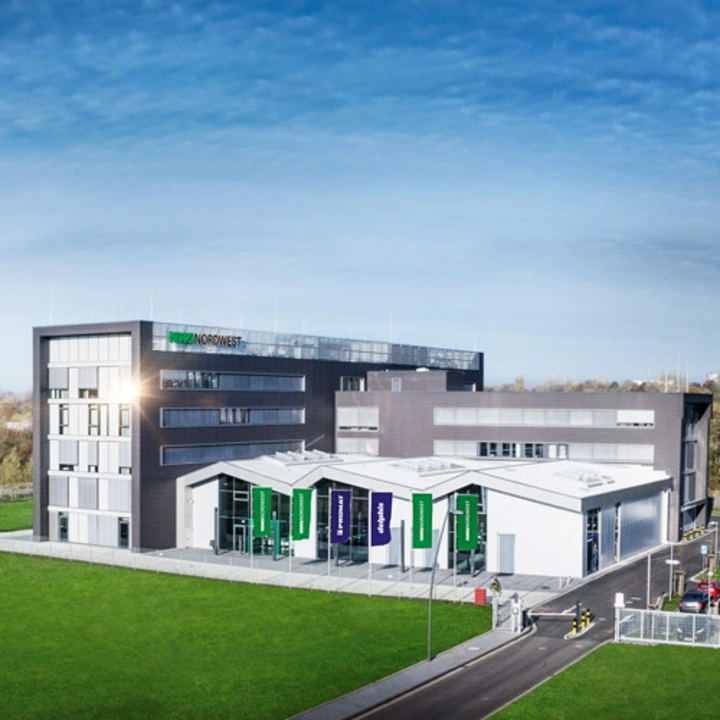
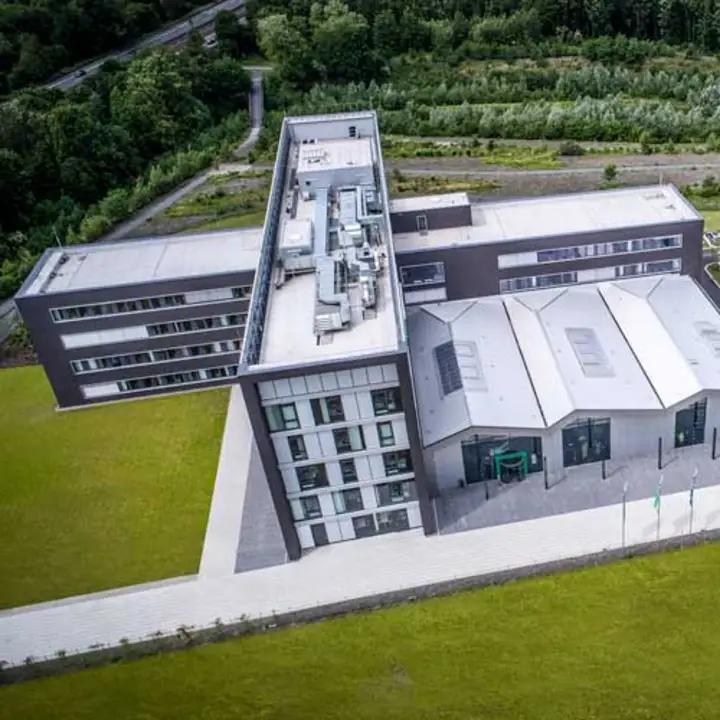
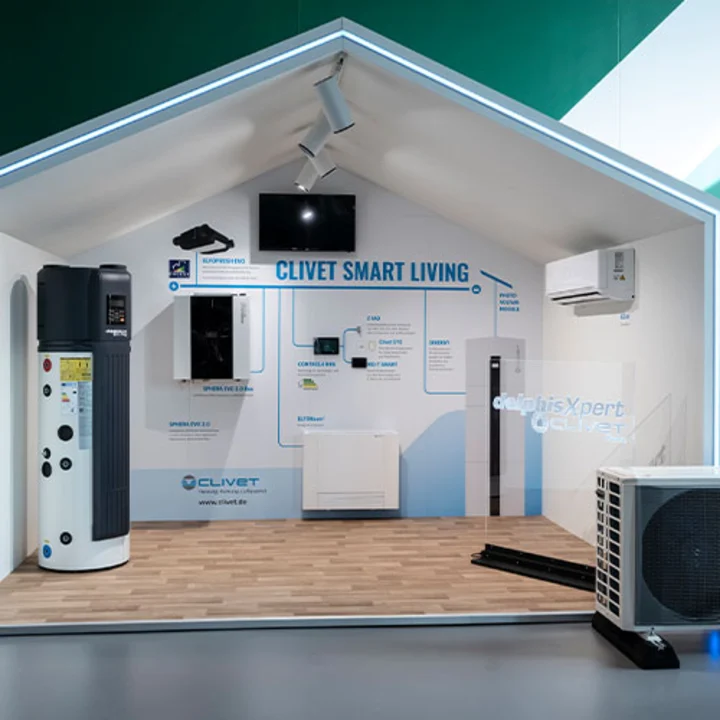
The venue provided a fitting setting. Before the awards ceremony, guests were given exclusive tours of the new logistics centre in Alsfeld. NORDWEST also applied a comprehensive approach to sustainability in the new building, incorporating photovoltaic systems, green roofing, air-source heat pumps and intelligent controls for LED lighting and conveyor systems, as well as electric vehicle charging infrastructure. “Our new logistics centre demonstrates that performance and sustainable practices can go hand in hand. Modern logistics must not only be efficient but also use resources responsibly. That makes this a particularly fitting place to recognise projects that likewise take concrete steps to put sustainability into practice,” explains Thorsten Sega, Member of the Management Board at NORDWEST.
Four projects impress the jury
An independent expert jury assessed the 63 entries. As they considered two of the projects, both of which focused on the circular economy and the responsible use of valuable raw materials, to be equally strong, they decided to split one prize. Four companies were therefore awarded a total of three prizes. The winners will receive 6,000 euros each, or 3,000 euros each in the case of the shared prize, to spend on a team event. The winners were delighted with their awards.
Gühring KG: “Gühring Tool Circle”
With its “Gühring Tool Circle”, the company creates a closed loop for carbide tools, from use through regrinding and take-back to recycling and the manufacture of new tools. The focus is on extending tool life through regrinding to original quality and recovering valuable raw materials such as tungsten and cobalt. Worn carbide tools are processed using the zinc recycling process, allowing nearly all the materials to be recovered and returned to production. According to a product carbon footprint study, using recycled materials in carbide production can reduce CO₂ emissions by up to 64.8% compared with virgin materials.
CERATIZIT: “A future for old tools – high-performance tools made from recycled carbide”
CERATIZIT also takes a closed-loop approach to carbide. Carbide contains valuable raw materials such as tungsten and cobalt, whose extraction requires a large amount of energy. For this reason, CERATIZIT collects, processes and converts worn carbide tools into high-quality carbide powder using the zinc recycling process. The company’s tungsten recycling rate was 91% in 2024. The upGRADE CT-GS20Y carbide grade uses up to 99% reprocessed carbide powder. The powder is processed using 100% renewable energy. This reduces the CO₂ footprint by more than half compared with a similar standard grade.
Technima Central GmbH: “INOMARK”
With INOMARK, Technima Central has developed an alternative to conventional pressurised aerosol cans used for industrial markings. The system combines a reusable DITYBOX® container with replaceable pouches of water-based paint and uses no conventional solvents or propellants. It is suitable for numerous applications, including civil engineering, road construction, mining, tunnelling and events. Reusing the container conserves resources and reduces waste. According to the submitted life cycle assessment, INOMARK generates just one-fifth of the CO₂ emissions, uses one-fifth of the water and produces one-quarter of the waste volume of conventional solutions. It also produces no VOC emissions.
WEICON GmbH & Co. KG: “Circular economy for production waste & reduction of CO₂ emissions”
With the Green Tube, WEICON has developed a more sustainable packaging solution for adhesives and sealants that reduces plastic consumption by 80% compared to conventional cartridge systems. The solution combines a cardboard cartridge body with a lid and tip made from recycled plastic. The adhesive or sealant is contained in a protected tube-shaped bag inside the cartridge. This requires significantly less plastic and allows a large proportion of the packaging to be recycled. The Green Tube is also compatible with standard cartridge guns and can be used without additional equipment.
Independent jury combines academic expertise with local government practice
The winners were selected by Prof. Dr. Linda Chalupová, Professor of Sustainability Sciences at Fulda University of Applied Sciences, and Stephan Paule, Mayor of Alsfeld. Linda Chalupová combines academic expertise with many years of business and management experience, focusing in particular on sustainability strategy, governance and long-term viability. Stephan Paule has been Mayor of Alsfeld since 2013, bringing his experience in local government and perspective on sustainable local development and long-term planning to the jury’s work.
“For me, sustainability is first and foremost a question of long-term viability: how do we prepare companies so that they can continue to act, remain resilient and succeed in the future? To achieve this, we need companies that move beyond mere words and develop, test and implement ideas,” says Prof. Dr. Linda Chalupová.
The jury defined ten assessment criteria. Particular emphasis was placed on the combination of environmental, economic and social impacts, the transferability and wider reach of a project, and a clear and credible presentation. In addition, a further aspect emerged – one that turned out to be essential during the assessment process: the courage to make worthwhile investments and pursue a chosen path consistently, even in challenging economic conditions.
“In different ways, the award-winning projects show that sustainable development is particularly effective when responsibility is translated into concrete action. We were particularly impressed by solutions that take a practical approach while also having the potential to inspire action beyond the confines of the company itself,” says Stephan Paule, summing up the jury’s decision.
It was precisely these different approaches that proved decisive in the selection: the winning projects keep valuable raw materials in circulation, reduce resource and material consumption or develop established applications in ways that combine environmental improvements with practical usability. In each case, sustainability is more than just talk: it is put into practice in concrete, measurable ways.
Through the Future Award, NORDWEST aims to raise awareness of these approaches beyond the event itself. The supplier partners’ projects will be presented in communication materials so that specialist trade partners can also raise awareness of these sustainable solutions among their customers.